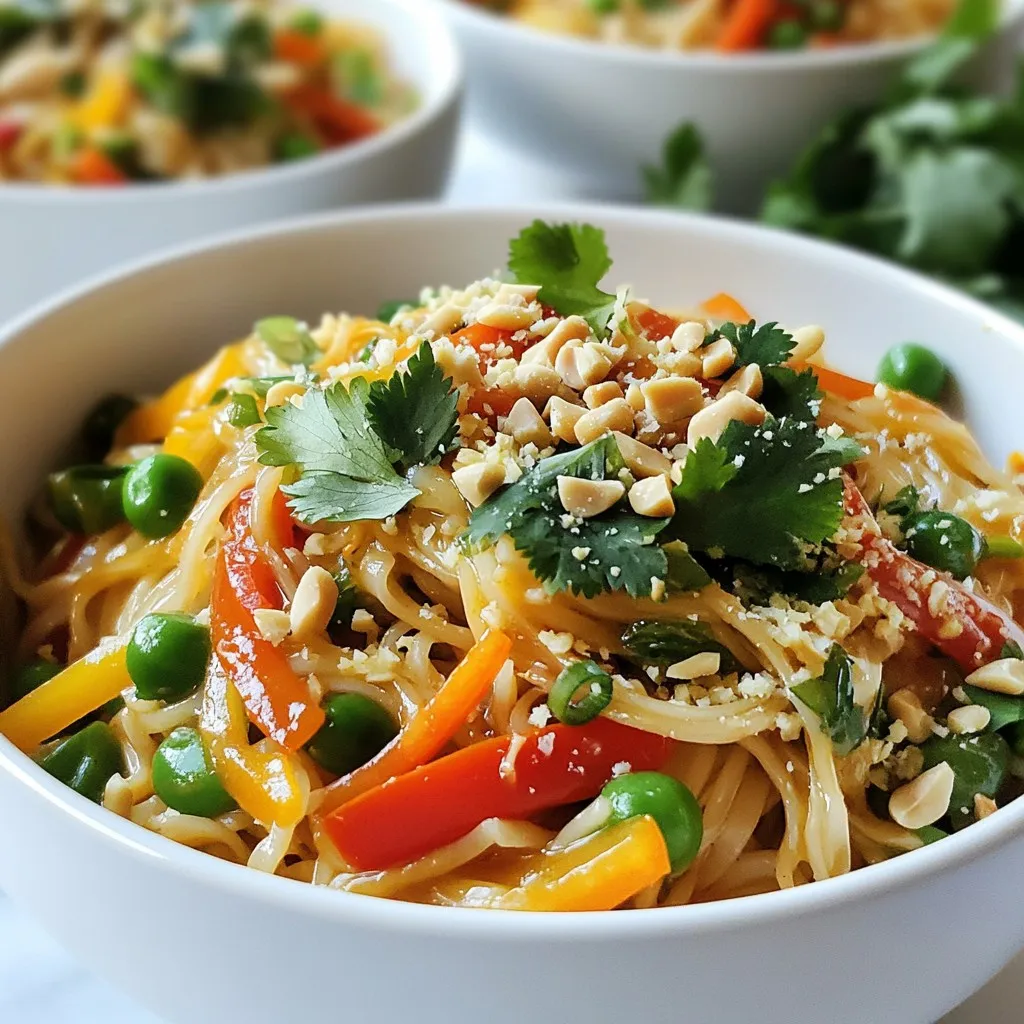
If you crave a dish that hits all the right notes, look no further than Spicy Thai Peanut Noodles! This meal bursts with rich flavors and is a breeze to make. I’ll guide you through the process, showing you how to blend rice noodles, creamy peanut sauce, and fresh veggies into a tasty feast. Ready to impress your taste buds? Let’s dive into this delightful recipe!
Why I Love This Recipe
- Quick and Easy: This recipe is ready in just 20 minutes, making it perfect for busy weeknights.
- Flavor Packed: The combination of peanut butter, ginger, and sriracha creates a deliciously bold flavor that excites the palate.
- Customizable: You can easily swap in your favorite veggies or proteins to make this dish your own.
- Healthy Ingredients: With fresh vegetables and wholesome ingredients, this dish is as nutritious as it is tasty.
Ingredients
Main Ingredients
– 8 oz rice noodles
– 1 cup peanut butter (smooth)
– 2 tablespoons soy sauce
– 2 tablespoons sesame oil
– 2 tablespoons honey or maple syrup
– 1 tablespoon rice vinegar
– 2 garlic cloves, minced
– 1 teaspoon ginger, grated
– 1 teaspoon sriracha (adjust to taste)
– 1 cup bell peppers, thinly sliced (red, yellow, or green)
– 1 cup carrots, shredded
– 1 cup snap peas or broccoli florets
– 1/4 cup green onions, chopped (for garnish)
– 1/4 cup crushed peanuts (for garnish)
– Fresh cilantro (optional, for garnish)
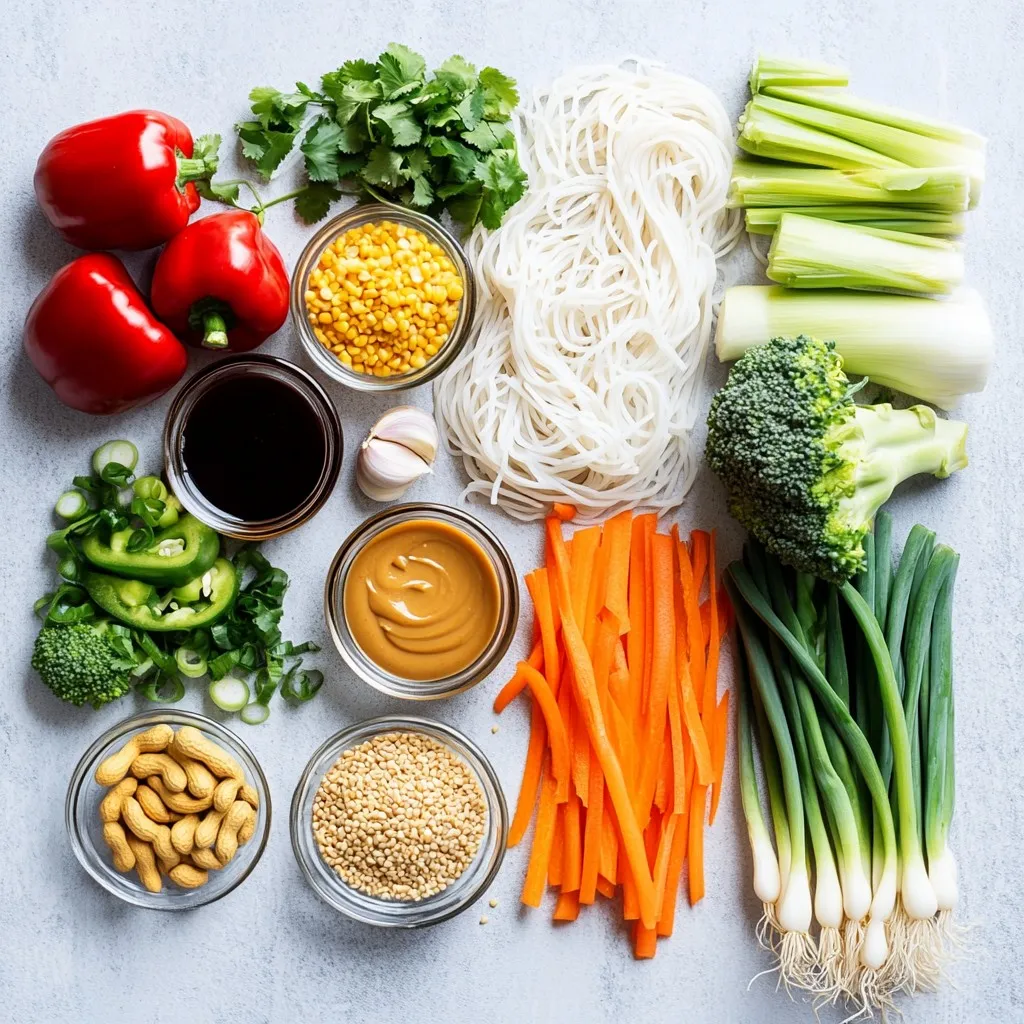
Rice noodles form the base of this dish. They soak up the flavor of the peanut sauce. You can find them at most stores. Choose smooth peanut butter for a creamy sauce. The soy sauce adds a salty depth, while sesame oil gives a nutty flavor. Honey or maple syrup adds sweetness, balancing the dish.
Next, add rice vinegar, garlic, ginger, and sriracha. These ingredients bring a kick and freshness to the sauce. For veggies, bell peppers, carrots, and snap peas provide crunch and color. Feel free to switch these out for your favorites.
With these ingredients, you create a tasty and colorful meal.
Step-by-Step Instructions
Cooking the Noodles
First, bring a large pot of water to a boil. Add 8 oz of rice noodles. Cook them according to the package instructions until they are al dente. Drain the noodles carefully, and set them aside. Remember to save a splash of noodle water. You’ll use it later to adjust the sauce.
Making the Peanut Sauce
In a medium bowl, whisk together these ingredients for the sauce:
– 1 cup peanut butter (smooth)
– 2 tablespoons soy sauce
– 2 tablespoons sesame oil
– 2 tablespoons honey or maple syrup
– 1 tablespoon rice vinegar
– 2 minced garlic cloves
– 1 teaspoon grated ginger
– 1 teaspoon sriracha (adjust to taste)
Make sure it’s smooth. If the sauce feels too thick, add a little of the reserved noodle water. This helps get the right consistency.
Sautéing the Vegetables
Heat up a drizzle of sesame oil in a large skillet or wok over medium heat. Add the following vegetables:
– 1 cup thinly sliced bell peppers (any color)
– 1 cup shredded carrots
– 1 cup snap peas or broccoli florets
Cook these for about 4 to 5 minutes. You want them tender but still a bit crisp.
Combining Ingredients
Now it’s time to mix everything! Add the cooked noodles to the skillet with your sautéed vegetables. Pour the peanut sauce over the top. Toss everything together until it’s well combined and heated through.
Serving Suggestions
Transfer the noodles to plates or bowls for serving. You can top them with:
– 1/4 cup chopped green onions
– 1/4 cup crushed peanuts
– Fresh cilantro if you like
This adds color and extra flavor to your dish. Enjoy your Spicy Thai Peanut Noodles!
Tips & Tricks
Achieving the Perfect Sauce
To make the sauce just right, start by adjusting the spice. I suggest adding sriracha slowly. This lets you control the heat. If you want more spice, add more sriracha until it’s perfect for you.
For a creamier sauce, use smooth peanut butter. If the sauce feels too thick, add a splash of reserved noodle water. This helps reach your desired texture.
Cooking Noodles to Perfection
Avoid mushy noodles by cooking them al dente. This means they should be firm when you bite them. Follow the package instructions closely.
Always reserve some noodle water before draining. This water adds flavor to the sauce and helps with the sauce’s texture.
Vegetable Variations
Feel free to swap out vegetables based on what you love. Bell peppers, carrots, and snap peas work well. You can also try broccoli or zucchini for a twist.
Think about seasonal ingredients. Fresh peas in spring or butternut squash in fall can add great flavor and nutrition to your dish.
Pro Tips
- Adjust the Spice Level: If you prefer a milder dish, reduce the amount of sriracha in the sauce. You can always add more later if you want extra heat!
- Customize Your Vegetables: Feel free to swap in your favorite veggies! Broccoli, zucchini, or even snap peas can add a different flavor and texture to the dish.
- Make it Ahead: This dish is perfect for meal prep! Prepare the noodles and sauce in advance, and store them separately in the fridge for up to 3 days.
- Garnish for Extra Flavor: Don’t skip the garnishes! Fresh cilantro and crushed peanuts add wonderful texture and flavor that elevate the entire dish.
Variations
Add Protein
You can make this dish even better by adding protein. Chicken, tofu, or shrimp work great. If you choose chicken, cut it into small pieces and cook it in the skillet before adding the veggies. For tofu, press it first to remove extra water. Cut it into cubes and fry until golden. Shrimp cooks fast, so add it right after the veggies. Just sauté until it’s pink and firm.
Gluten-Free Options
If you need a gluten-free meal, swap out the noodles. Look for rice noodles, which are perfect. You can also use gluten-free soy sauce. Brands like Tamari or coconut aminos are great choices. Always check labels to ensure they fit your needs.
Vegan Adaptations
To make this recipe vegan, use maple syrup instead of honey. All other ingredients are plant-based, so you’re good to go. Double-check your soy sauce to ensure it’s vegan. This way, you keep the dish tasty and friendly for all diets.
Storage Info
Keeping Leftovers
To keep your Spicy Thai Peanut Noodles fresh, store them in an airtight container. Make sure the noodles and sauce are well mixed. This helps keep flavors strong. You can store them in the fridge for up to three days.
Reheating Instructions
When reheating, use a skillet over low heat. This method helps keep the noodles soft. Add a splash of water or broth to keep them moist. Stir often to avoid sticking. Taste the noodles while reheating to adjust flavors if needed.
Freezing Options
Yes, you can freeze Spicy Thai Peanut Noodles! Place them in a freezer-safe container. They can last for up to three months in the freezer. To thaw, move them to the fridge overnight. When ready to eat, reheat in a skillet as described above.
FAQs
What can I substitute for peanut butter?
If you have a nut allergy, you can use sunbutter instead of peanut butter. Sunbutter is made from sunflower seeds and has a similar creamy texture. You can also use tahini, which is made from sesame seeds. Both options work well in this recipe.
How can I make this dish less spicy?
To tone down the heat, simply adjust the sriracha levels. Use less sriracha or omit it completely. You can add more honey or maple syrup to balance the spice. Creamy coconut milk is another great way to cool down the dish.
Can I meal prep this recipe?
Yes, you can meal prep Spicy Thai Peanut Noodles. Cook the noodles and veggies in advance. Store them in airtight containers in the fridge. For best results, reheat in a pan over low heat, adding a splash of water to keep them moist.
In this post, we covered how to make a delicious Spicy Thai Peanut Noodles dish. We explored key ingredients like rice noodles and fresh veggies. I shared simple step-by-step instructions from cooking noodles to making peanut sauce. Tips on achieving perfect sauce and noodle texture were also included.
Remember, you can easily adapt this recipe with protein or avoid gluten. Store leftovers properly to enjoy later. This dish is flexible and fun, so feel free to experiment. Enjoy your cooking adventur